You occasionally come across a response or opinion that catches you off guard. The world is a rainbow and there are spectra within spectra, so I am never expecting everything to make sense to any of the MillionBillion Dougs, but still…
Name is obvious retracted, but the source was The Guardian which kind of spoils my obfuscation but I like to cite my sources.
Apologies for any readers with sight issues, but I’ll not quote it in full [see link in caption to find more] but the gist is that the person wishes to see more foods catering cool vegans and vegetarians. The opposite given would be foods like “vegetarian curries and chilli dishes.”
In principle, it reminds of a complaint I read years ago in the comments on Vegan Black Metal Chef‘s videos: that vegans can only stomach their food by making it too spicy. There was a period where it was one of the gotcha arguments against plant-based diets. You can still find some remnants if you search online.
The broad argument, which I am absolutely not claiming is being cited by the letter writer [it seems more likely that they had a few dishes that were all of the spicy version and is making an incorrect generalization], is asinine and untrue. The fact that it almost always coupled with the sibling argument that meat-based foods are just more filling, flavorful, and satisfying without requiring spices is a fake you are being tricked into accepting as face value.
This is leaving aside that some variations of these arguments are clearly framed in racist tones. It’s ok, you also have arguments that veganism is inherently racist. It’s a balancing act.
I’m not sure what the logical fallacy would be called but the structure would go like this: Option A is a problem (based on Opinion C, which may or may not be related to either A or B in truth), therefore Option B must be better though I will avoid discussing it at any depth.
For example, countries with snow can make snowmen and snowmen are fun for children therefore countries without snow are bad for raising children. I’ve created an arbitrary line to judge two elements and then stated those two elements in the context of this line in a way that makes the responder think they have to respond directly to context of the line. It’s the big sister version of “Yes or No, X is bad” and then not allowing any nuance. Tracks great for snippets but not in the real world where very few things are that simple.
Because the spicy plant-based/forward food option is overwhelmed with evidence to the complete contrary.
Not only do many of the same cultures that spice their vegan dishes also spice their non-vegan dishes, the implication that someone craves meat at all times is just false.
Tastes vary greatly by all sorts of factors. As a plant-based American in Europe, I can say from some experience that most “spicy” dishes here are far below the spice tolerance that would be expected back in the States. In our recent trip to Glasgow, even some of the spiciest dishes barely triggered a proper spice response in myself (the Hot Cock is the main standout, thanks Buck’s). The only inverse I have seen is that Delhaize sells a vegan burger [sorry, EU] that has a bit too much cumin. Making it taste more like a sausage patty than expected.
A huge amount of our food stuffs are just naturally plant-based and plant-forward. Yogurt. Olives. Mashed potatoes. Fries/Chips. Bread. Scrambled eggs. Cheese [minus the rennet]. Tofu. Seitan. Hummus. Beer [minus the isinglass]. Ice cream [whether it is made with soy or cow’s milk]. Beans. A lot of soups are so close that it is trivial to cut out any meat. Gravies [at least can be made such]. Puddings. A lot of breakfast cereals that do not have gelatin-based mini-marshmallows [including the vast porridge family]. Muesli. Fruits. Vegetables. The list is extensive. Pizza and pasta is already right there and they are especially easy to play with.
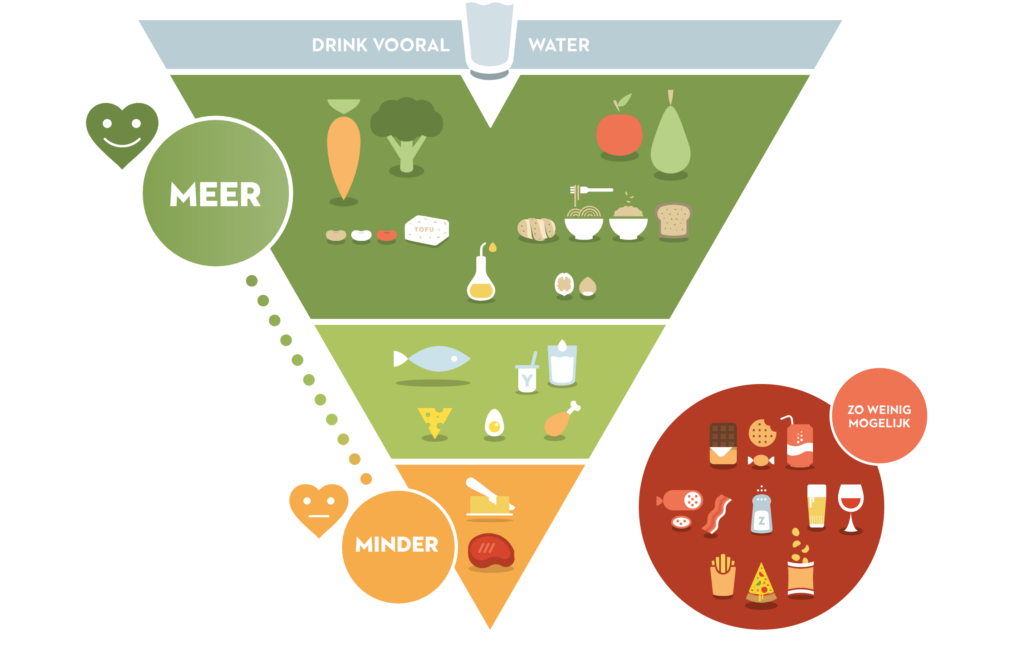
In the usual “food pyramid” type structure, the only bit that isn’t plant-forward is the meat/fish/fowl segment(s). And with the notion that many breads and “calcium-group” items can be made or “replicated” without any animal products at all means only the minority is non-vegan. A few lentils, beans, quinoa, or what have you can cover that gap. It’s actually easier than that to get plenty of protein.
However, a huge amount of food-centric dialogue tries to claim that the second narrowest slice of the food plate/pyramid/etc [only “snacks” is smaller] is the core of the food experience. Sometimes aggressively so.
Fun fact, the Belgian food pyramid (or, at least, one of them) is inverted and has white meat in with the melk-en-kaas category and puts bread up in the eet-meer category, which feels so properly Belgian (though they put beer, chocolate, and fries in the “little as possible” category which is a shocking betrayal).
“Vegans are giving up an important part of their diet and abstaining from the full experience,” is another common fallacy that tries to liken abstaining from meat eating as something akin to self-hatred. Most food is veg*n. By centering every maaltijd around the vlees, you ignore so many flavors and structures inherent in meals.
My advice, then, if you are looking for “cool veg*n” foods, to just take a look at what you eat and eat that. Toss in some ready-made vegan food if you need (Beyond Burger, whatever). If you are at a restaurant, then ask them to tone down the spices where possible.
Another option is to use something like HappyCow to look up plant-based and plant-forward or at least plant-forward-friendly restaurants in your area.
If you need quick meals, then start with the fruits/veg options and toss in some hummus and bread. Tweak, ad infinitum, to your heart’s content. Once you stop having to start with the question of “What goes with the chicken?” you start to realize that food has so many variations that have been broadly locked out by the so-called common sense of the meat-and-two-sides meal structure.
I write the following with two perhaps important caveats:
I am an American citizen currently under the auspices of the European Union and enjoying the delightful country of Belgium for work- and family-related reasons and therefore mostly have a stake in this “fight” in that, for a period of a couple of years, I will be eating Belgian (et al) food.
I consume a plant-based diet (though lean more towards beans and tofu than pre-processed “meat substitutes”).
Stricter Naming for “Meat-Alternatives” Vegan Products
And Arjen Lubach gives a nice rant about it which is actually where I first heard about it because, once again, The Algorithm and I have not yet come to terms. His video is in Dutch with English subtitles available. I appreciate his sass.
The ban, proposed by French center-right lawmaker Céline Imart, was buried in a broader reform of EU farming rules designed to tweak how farmers sign contracts with buyers and adjust a raft of other technical provisions. It was one of more than 100 amendments MEPs decided on at their sitting in Strasbourg.
When the numbers flashed up on the screen — 355 in favor, 247 against and 30 abstentions — Imart looked visibly relieved and drew a round of applause from her colleagues. The overall reform package, including the ban, was later adopted by a comfortable margin.
Following the links in that article, the actual terminology is explained. Adding to a list of suggested “reserved for meat products only” terms introduced in the utter mouthful of the Annex 1 (PDF) to, deep breath, the “Proposal for a REGULATION OF THE EUROPEAN PARLIAMENT AND OF THE COUNCIL amending Regulation (EU) No 1308/2013 as regards the school fruit, vegetables and milk scheme (‘EU school scheme’), sectoral interventions, the creation of a protein sector, requirements for hemp, the possibility for marketing standards for cheese, protein crops and meat, application of additional import duties, rules on the availability of supplies in time of emergencies and severe crisis and securities.” On that document, pages 3 & 4 have the terms including the usual suspects of beef, chicken, pork, and rump.
Amendment 113 (PDF) is what is triggering the above articles and discussions. To the above list, it adds:
Steak
Escalope
Sausage
Burger
Hamburger
Egg yolk
Egg white
In the next part, it refers to poultry-meat (note: hyphenation is mine to stop spell checker from shouting at me) as a whole other broad category (via reference to Regulation (EU) No 543/2008) though most of that seems primarily contained within the aforementioned/linked proposal.
Perhaps buried a bit in the coverage is part of Amendment 113, prior to enumerating the list, states: “These names include, for example.” In other words, the above list should not be considered total or all inclusive. It essentially opens up the doors to the argument that any name understood by common-use language that might be associated with meat-adjacent production could be argued to be included by proxy. Jerky, pot pies, and maybe even certain soups and stews could be argued under such rulings.
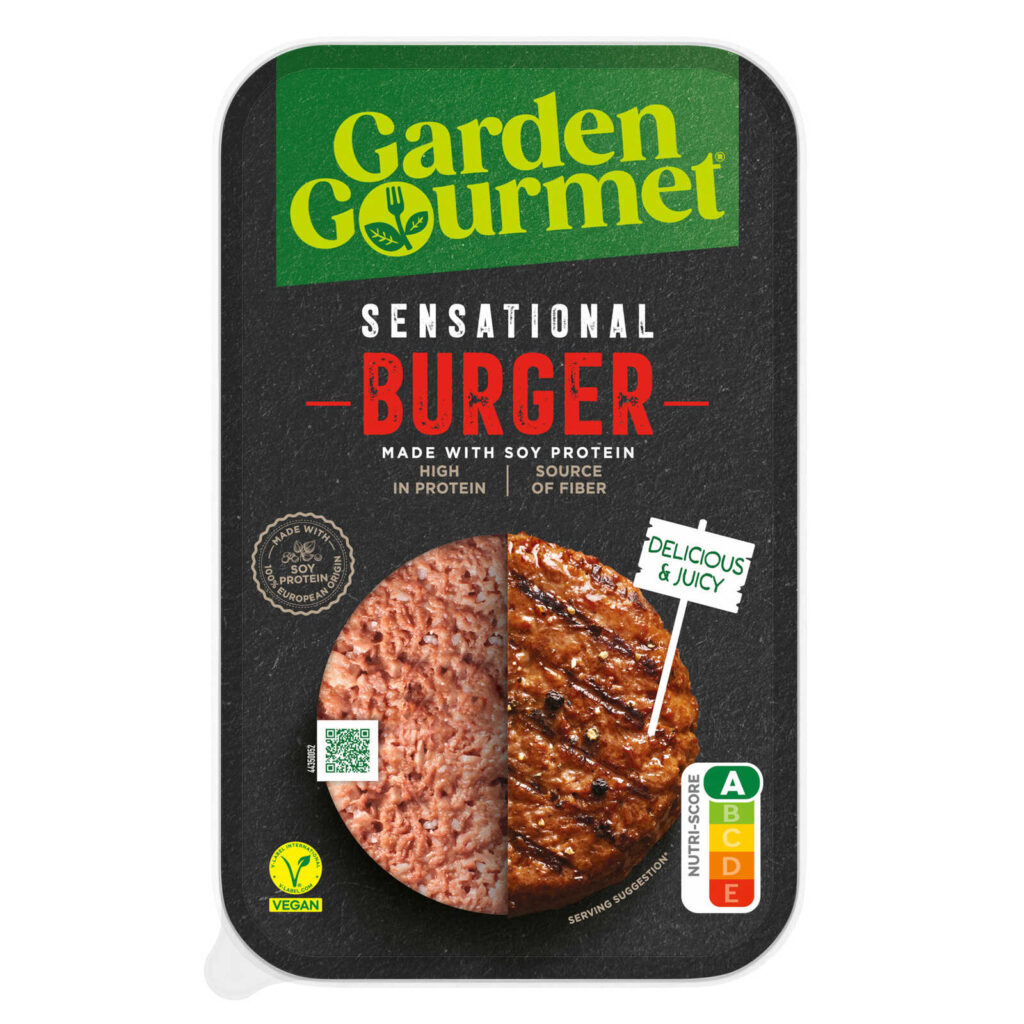
It is labeled as vegan, soy-based (twice), and a source of fiber (which is distinctly untrue of meat based burgers). It is also labeled as Garden Gourmet though I admit that you could make the argument that “garden” does not necessarily preclude meat.
Why Such Laws at Least Slightly Bother Me (and not exactly the obvious reason)
Let me be clear, I 100% support farmers and I 100% support clear labeling. Consumers deserve options. Farmers deserve recognition as the backbone of society. Society exists as a concept because farmers make the gathering of people into cities and countries possible. It is hard damned work and they rarely get enough credit for the things they do.
Seriously, thank you.
My first issue with any such law, be it here in Europe or elsewhere, is that the conversation almost always turns quickly to consumer confusion. I feel a defined need of consumer harm should be demonstrated before the consumer becomes the main focus of many arguments. I am not sure if there is any evidence that consumers are actually confused, or harmed, by the label. If anything, such terminology helps consumers to find new products and have greater overall choice.
In the vegan space, sometimes the problem is more or less the opposite. Outside of a few restaurants that bury their vegan-lede, meat-eating customers tend to have better labeling than not. On the other hand, if you find a “garden burger” you sometimes have no idea if it is vegan, vegetarian, or just a label meaning “meat-based burger with fun root vegetables” without clarifications. I have ordered plenty of greens and beans and found out that the entire dish is just packed with bacon or ham or meat-broth. Things like kimchi might have their fish sauce component overlooked and served to vega*n customers. One Huntsville restaurant I used to love had hashbrown casserole that made with cream of chicken soup but not labeled as such.
While there is evidence of harm to traditional meat farmers, and therefore an argument fully based on the production side has merit, I am not even sure that such a ban will actually do much to protect them. A similar EU ban on the use of “milk” in reference to plant-based dairy alternatives has not slowed an increasing adoption of plant-based alternatives to replace dairy products. In fact, that’s one of my favorite things about Belgium, there’s a lot of cool soy drink to be had.
Instead, the primary benefit seems to be a chilling effect and re-labeling cost associated to producers of vegan and vegetarian products. “Minced soy patties” instead of veggie burgers or, you know…gehakte soja pasteitjes. Will that really make a difference? While you eat with your mouth and your eyes/nose, etc, the name of food only partially factors into your long term enjoyment of it. It’s not like “burger” or “sausage” or “hot dog” are particularly appetizing words in and of themselves.
I’m just not exactly sure it will actually deter sales. It will require labels, over time, to be adjusted, though, and that costs. And it reframes discussions of vegan diets into more niche terminology.
The Issue of De-meaty-fying (and Mystifying) Meat
My second issue comes out of the general class of words being targeted.
“Burger” and “sausage” terminologies are adopted by vegans and vegetarians because the words’ histories are in a huge class of products only really classified largely by rough shape and product standards.
Amendment 113 says it for me (emphasis mine):
(2) ‘Meat preparations’ means fresh meat, including meat that has been reduced to fragments, which has had foodstuffs, seasonings or additives added to it…
(3) ‘Meat products’ means processed products resulting from the processing of meat or from the further processing of such processed products, so that the cut surface shows that the product no longer has the characteristics of fresh meat.
Burger is practically a neologism. Even tracing the roots as a sandwich back to the late 19th century, the general rise of minced meat being flavored with vegan additives like salt, pepper, onions, and other spices and and then shaped into a scone before being served with a light garden salad between two slices of bread is an absolute infant by historical food standards. The Oxford English Dictionary lists “burger” as being first seen in 1939. While I’m sure that fried biscuits of mince-meat are older in technology, we are not talking a particular class of bread-like meat shapes. We are talking about a specific word.
And while sausage is a much older technology (some of which are essentially “burgers,” now), one in which minced meat is combined with more vegan ingredients to give it a better flavor and then shaped roughly like root vegetables or, you know, other things, the sheer variety of presumably-acceptable-by-Amendment-113 recipes is mind boggling.
Taking the piss a bit, I asked ChatGPT to give me a rough count of sausages not including vega* options: it put the number around 1200. Then said that Germany had 1500+ of those 1200, so…you know, much like prepared-meat-adjacent-food, it is best taken with a grain of salt.
And many of those recipes involve non-meat additives ranging from small amounts to not quite small amounts at all. It is the sorites paradox. When does the pile of sand become a not-pile? How much salt and pepper and vegetable matter in ground beef + beef-fat is too much?
The end result is that there are entire classes of food, let’s add in “nuggets” and “lunch slices” and “filets,” that are popular despite, or possibly because, their removal from the central meat-ness of their ingredients.
I’m more open to phrases like “egg yolk,” “bacon,” and “steak” being recognized. Of course, the latter two are also seeing a general fracturing from a particular food into a wide class of foods.
I mean, I might eat a plant-based diet but even when I was an omnivore, I would rarely wish turkey bacon on anyone.
Just joking, I’m not going to yuck your yum.
I am purposefully going to avoid bringing up a huge variety of food which encroaches upon the same aspect of a naming schema (e.g., pindakaas [peanut cheese]) but are given a pass because they are not pitched as alternatives.
Of course, peanut butter is an awesome source of flavorful protein, but that’s for another day.
To Counter My Own Argument
The big counter to my own argument is that I actually like moving away from meat-derived names in general. Words like patties and nuggets are general enough, but other phrases (e.g., beef-like, chick’n, veggiefish) sometimes pitch the vegan diet as a strange second place to meat-centric diets.
Let me be really clear about something: despite the constant insistence that a plant-based and plant-forward diet is somehow being centered in self-denial and self-limitation, my chosen diet is extremely varied to the point that adding back in meat and dairy (the latter to which I have a strong physical reaction) would be nothing more an opportunity cost vs cheaper, more ecologically friend, more sustainable, and more varied foods. To say it louder for the people in the back:
Despite the constant insistence that a plant-based and plant-forward diet is somehow being centered in self-denial and self-limitation, my chosen diet is extremely varied to the point that adding back in meat and dairy (the latter to which I have a strong physical reaction) would be nothing more an opportunity cost vs cheaper, more ecologically friend, more sustainable, and more varied foods.
While you do cut out some foods, the variety of flavors, tastes, and types of foods is far greater on the plant side of thing unless you perhaps include a wide variety of non-farmed animal meats, more exotic fish meats, and insect protein.
Even then, a lot of the cores of cooking, such a spices, are notoriously vegan. Minus the use of animal fats, meat, and dairy itself.
While the line between “non-beef plant-based hamburger patty” and “centuries old tofu recipe” is wide, my point is merely that such inventions are constantly being treated as a newfangled idea when they, in their purest form, predate many modern food practices. Human society has enjoyed plant based protein long before protein was being studied as a concept.
And I admit I would be absolutely irritated if words like “tofu” or “seitan” were taken out of context and turned into a meat-bearing product (setting aside that plenty of tofu and wheat gluten recipes do involve meat, traditionally).
Maybe this is a good time to come up with a new terminology and recommit to the “Vegan 1.0” of increased food variety, whole foods, sustainable practices, and flavors that are not so beholden to a meat-centric view that is so hardwired that it, checks notes, requires laws to protect it.
Conclusion
I will obviously abide by whatever decision comes out of this, I am just not all that supportive of re-limiting certain words when your average consumer is more than capable of coming to their own informed decision.
The history of food is vast, complex, and as essential to culture as language itself. Using language to reshape that in a prescriptivist manner actually interferes with one of the great joys of human expression: enjoying food, updating old recipes into new delights, responding to cultural change, and sharing all this with others.
All that being said, I will reiterate that I do very much support farmers and their sacrifice. I just also support consumers and their sacrifice.
PS: Shout Out to Dan
My roommate in 2002, Dan, complained about some world-building I was doing in a roleplaying game I was writing where I said that by the late 2010s and early 2020s, a “war of words and their meaning” would be the frontline of the reality wars: where different people fractured into world views framed by their languages. He said such terms as I was using was overblown and never going to happen.