
Dickens of a Blog

The third iteration of Doug Bolden's various thoughts and musings.

The Oddities of Albert Campion Ebooks

Tuesday night, I was watching through one of my absolutely all time favorite comfort watches: “Sweet Danger,” a double episode of BBC’s Campion.

Amanda Fitton and Albert Campion’s flirting remains dear to my heart years after first watching. Dawwww.1 Series needs a dang Blu-Ray.

As I do, I got curious about seeing which of the Campion ebooks I have managed to accumulate — I have a complete run of the print books back when Felony & Mayhem had the license to print the print books — but…you know.

The First Oddity

What I found confused me, because while I wasn’t expecting to see the classic (to me) F&M covers, I was expecting to see the relatively profession covers of Open Road Media’s versions which have a certain panache. Instead, what I found was several variations of AI-generated content:

NOTE: This particular version doesn’t claim a publisher, as far as I can tell.

At least a solid handful of the books would still have the Open Road Media edition but would also have one of these newer versions priced lower so the “Albert Campion Series Page” is largely full of them. The general quality between the two covers is immediately obvious:

Now, AI book covers is not necessarily a truly-bad sign even if it is not necessarily ideal for hopes-getting-up, but I was also pretty confused (especially when care is not taken to capitalize “Albert” in the cover).

The Second Oddity

Allingham’s works are not, largely, in the public domain. Black Dudley2 is, and Mystery Mile. At least in the US (which Amazon dot com should be following).

Asimis is out of the Ukraine.3 They mostly cover the first four books so it is possible there is a different pub-dom situation there, or even a different licensing. Again, not sure how that impacts the American version of Amazon.com, but there you go.

There are two other publishers, though: “Unabridged Books” and “Adhyaya Books House LLP.” The latter is from India. Absolutely no clue about the first since it is effectively an impossible term to search with definite confidence. They bounce around in later volumes, here or there. Sometimes leading to copies with the completely wrong cover:

How does the “official” copy of a 200pp book get up to 5.2MB?

I have no idea the licensing, and so will assume this is all above board, but it does show how “manipulation” of prices can break Amazon’s Kindle listings when multiple versions of an ebook are available. Which can have some surprises for the end-user. Especially in the light of Amazon’s somewhat infamous 1984 incident back in 2009. [To this day, an incident taken majorly out of context by people who use to try and prove that Amazon is deleting books on the reg.]

NOTE: The Asimis books seem to be sub-licensed through De Marque who have a philosophy of accessible ebooks. Let me tell you how I know.

The Third Oddity (a two-fer)

In what is a perfectly Doug whoopsie, I accidentally fat fingered the “Buy Now with 1-Click” button while trying to simply scroll over to find out more about why there were multiple editions. That’s how I ended up with a copy of this book:

Goodbye $0.99, it’s like I barely knew you.

Right after mis-clicking, I let out a long sigh and then decided to look deeper to figure out more about what was happening. Here are some things I learned.

The Asimis illustrations seem to be taken from disparate sources. I do not mean to say that they are taken from various editions of Campion stories, they just seem to be either old images from other books or AI-generated images in an older, Victorian style. They “fit” the general shape of the passages to which they are attached, but also lead to a strange cognitive dissonance.

The Asimis text is different (with some typos/glitches but better reflow). I first noticed the missing quotes in the text at the start. To do some comparisons, I got my copy of the Felony & Mayhem paperback and went to the same chapter and had a little bonus surprise. The text was very slightly different. “Although you’re a foreigner, Squoire…” had no “Squoire” in the paperback. To check, I got the Open Road Media version of the ebook and checked it (yes, Space Pilgrims, thanks my misclick I now have multiple versions of the ebook on my Kindle…for accidental science!).

Not only does the Asimis have slightly different text with some additional words, in 70% of the cases it has better reflow with clearer paragraphs. Though, there are places where it breaks in other ways.

For those curious, in the print version it looks more like this in the Felony & Mayhem print book:

Open Road Media wins that fight, even if it’s paragraph spacing outside of it is lacking.

Here’s another change in text, though, where I like Asimis’s version:

I just like the “The name was a local one, derived” more than “The name was derived.” The former doesn’t really add anything but rhythm, and rhythm is important.

My guess is there is some difference between the American vs British text or some such, and that is causing it (Asimis using double-quotes in the American English standard).

The Fourth Oddities

Wrapping up, because this was more to document the strangeness rather than say anything particular [besides maybe Amazon should let you filter publishers more easily/readily and needs to control its dang Authority files…FRBR FRBR FRBR, amirite, ‘brarians?]

Here are two things I cannot confirm because I am not going to accidentally buy more copies of these books [please, fat fingers, please], but I saw two complaints while checking reviews that might be of importance:

(1) One reviewer of Mystery Mile said they were frustrated that it was simply a repackaged Black Dudley. The narratives of both are fairly different so my guess is that there is at least one version that gave one of the books the wrong title. I glanced through all the previews I could, but did not see it, but it could have been a paperback version. Or the reviewer might have been talking about broader themes.

(2) A reviewer of another “illustrated edition” said the the images were risqué. I have no idea their tolerance and have learned from experience that it could be anywhere from “lingerie” to full nudity.

Doug’s Final Thoughts

The primary final thoughts I have are, in order of importance to myself:

  • You should read more Campion. Yes, you. Allingham was delightful.
  • Campion needs a dang Blu-Ray+ edition.
  • I would 100% adore a Sweet Danger movie as long as they accepted the weird mish-mash of gangsters, evil businessmen, satanism, English folklore, “Local shops for local people,” and twee flirtations.
  • Amazon needs to figure out a way to keep this in control before it gets even worse when a billion versions of book can be insta-plagiarized by AI.

  1. While not a long list at the best of times, the only on-screen flirtation that makes me giggle more is from The Mummy and that one is practically cheating because damn, son. ↩︎
  2. StandardEbooks has a copy if you want it. ↩︎
  3. Another publisher is listed as Andrii Ponomarenko, also from the Ukraine and also from Kyiv, with very similar covers across the books and very similar by-lines, so I assume this is the same person/entity. ↩︎

Abusing PLEX Song Moods to Make Better | Different Playlists

PLEX playlists are missing some sorting features — perhaps for good reason — that can be solved by creative abuse of song moods.

The Issue

Some of the issue is downright linguistic | intentional.

What is a playlist? For some people {0-100%}, a playlist is a curated, in-order list of songs they want to play. For some people {0-100%}, a playlist is a subsection of their musical library to help sort from years of backlog. For some people {0-100%}, a playlist is simply a large glob of music to played on random shuffle for long periods of time.

These groups can overlap where sometimes someone wants a big hunking random glob of music and sometimes wants to drill down to a specific artist in that glob and focus on that.

PLEX, though, seems to almost exclusively lean to the first definition for their playlists with the third being included by the shuffle command.

Which leads to an issue for the second definition.

Let’s say you build up a list of some of your current favorite songs [see image above for a few random picks]. Then, you think “Oh wait, I forgot this song by a particular artist” and you add another one…

Now that new song is there at the bottom. As you mouse over it [evidenced back in the top screenshot] you can click and drag it or delete it, but once a playlist gets over, say, 50+ songs the amount of time you can spend adding new tracks by an artist and sorting can get lengthy.

On MOBILE, it does allow you to “see” a playlist by albums and artists, but it puts those items in the order they first show-up rather than alphabetically and clicking on that item doesn’t take you to the songs in the playlist that match the criteria but to the whole album or artist:

This means that a playlist as it stands serves only the first and third categories: Specific Play Order and Random Glob. However, I really prefer the second and third categories mostly: Musical Subset and Random Glob.

I set out to see if I could figure out a workaround, and I sort of did.

Collections and Smart Playlists

Playlists are not the only other sorting method in PLEX. There are actually several (including stuff like Folders) but for now I’ll look at two: Collections and Smart Playlists.

Collections are applied on the Artist and Album level (but not song). They can be whatever you need. I keep several albums sorted in various collections for soundtracks to various solo play campaigns and a broad pair called “Spark Joy” — for something akin to “current hits” — and “Core” — more for major albums of my life.

Smart Playlists are as they seem: playlists generated “on the fly” based on certain criteria which match. Album genre, release date, artist country of origin, whatever.

For reasons I do not understand, Smart Playlists support better sorting.

For instance, I can create a Smart Playlist that only shows music released in 2026 and then sorts it by most played albums so my top played stuff is near the top. It’s a fairly trivial sort.

The problem with this is that Smart Playlists are looking for certain standard criteria. That DEMO playlist above is lacking any obvious structure that would make a good Smart Playlist. There’s several j-pop pieces and then a single song from Belgium.

How do we bridge that gap? This is where I realized I could “abuse” Moods to create something new.

Song Moods

Songs do not have “Collections” as part of their tags for whatever reason. They only have “Moods” and “Genres.” This is, perhaps, an oversight. However, this is all about hacking around limitations.

Let’s go back to the idea of a “Spark Joy” list for current hits. I can add a “Mood” to a song I want to be in my Spark Joy list. I can call it what I want, but for now I’ll just call it Spark Joy (which I’ll apply to the recent “drop dead” by Olivia Rodrigo):

I can go through and add this Mood to every song I want to be on the playlist. Then generate a Smart Playlist based on the Spark Joy Mood, and get something like this:

A playlist that allows for types 2 and 3, which is good for me.

It also allows me to build “anti-moods” [I use zzzKEYWORD to make it easy to find] to exclude songs from being played from Smart Playlists generated from wider criteria (e.g., country of origin). Why? Think of things where you have a genre or decade or whatever but in the middle of that is a “Best Of” or “Live” album that you don’t want to have play. You can set up something complicated like this:

Essentially, if it matches any of those genres but does NOT have the track mood “zzzJapanese” then it will show up. It can also be useful I want to tag a bunch of albums has having something like “Epic” mood but there are a few songs that break immersion, that sort of thing.

Type 1 Playlists Require Actual PLEX Playlists

With that being said, if you want the type 1 playlist — Specific Play Order — this will not work. For those, you would use the actual PLEX playlists.

Far From Perfect

All this being said, this is far from perfect and it is not a slam-dunk solution. I like it, because it allows me to do metadata sorting. It fits my mindset as a librarian. Still, there are issues. Some might be killers for you.

(1) [SMART ]PLAYLISTS DO NOT HAVE QUICK SONG EDITS

If you are in the album view, etc, you have a little pencil icon you can click on to edit a song where you can adjust song mood and such. For some reason, this is hidden in the playlist view, including Smart Playlists. This means if you get to a song you no longer want to be in the playlist, you have to click on the song title, go to the album, and then click on the pencil icon there.

(2) NO SUPPORT ON MOBILE (?) YET (?)

I thought I read in release notes that PLEX was going to {soon | in beta | ???} support editing track/item metadata on mobile but right now it does not seem to exist, at least not on my build and app. This means if you use this system to build up sortable playlists, you have to use the Web interface while you can use the more traditional playlists just fine in mobile.

(3) UNSURE: MIGHT NOT WORK ON SHARED

This one I don’t know, but it possibly won’t allow folks whom you share your library with to build their own similar set-ups. I’ll have to test this one and get back to you (Kaz has been wanting access, so they can be the guinea pig).

(4) TIME CONSUMING

The biggest problem is that it takes a fair amount of time to start. After you get early parts in place, adding a few songs is relatively trivial but the initial building of the Mood, Anti-Mood, and Smart Playlist is potentially a longish investment.

Compared to the time it would it to take you to do something similar in Foobar2000 it is pretty extensive. I assume Spotify can do it pretty quickly.

STILL, something like PLEX gives you control over your own music in many ways, while retaining the ability to play it across multiple devices or on the go.

The Tale of Two Kindles

On the left is my Kindle Colorsoft. On the right is my Kindle Voyage. I thought about cleaning them up for the shot but I think it drives home just how often the two devices are used.

A Brief History of My Kindle Usage

My first Kindle (Gen 2) was purchased in 2009. One of the older, “clunkier” models with the big side buttons and the built in keyboard. I used it a good bit. Kept it largely on airplane mode and “side-loaded” it from downloaded content.

When the storms hit Huntsville back in April 2011, that Kindle was used to keep track with the outside world and I used a mixture of it and a old flip phone to order equipment we needed to survive.

In 2012, I upgraded to the Kindle Paperwhite. Looking on Wikipedia (LGT: “Amazon Kindle Devices”), seems like I would have gotten one of the first ones.

For five or so years, the Paperwhite was my primary reading device though I honestly do not recall how often I read from it. Often, I would say. Around here, somewhere, I probably started to read Kindle books as often on app and website.

Voyage and Colorsoft

I got a Kindle Voyage in 2017. Oddly enough, it was the Oasis that caused this. I was interested in a new Kindle and Oasis was getting a lot of hype but for whatever reason, the Oasis simply did not gel with me and I ended up with the Voyage as “a replacement.”

For the next eight years, it was the center of my reading life. Now, this was also the time after Barbara’s birth and then COVID and then the accident so it was kind of a weird time for me to read. I read pretty frequently, but we’re talking about maybe thirty books per year compared to three times that a few years prior.

I really liked it. It was often in my bookbag to pull out when I wanted to read for a bit. It also has a bit of personal history for me:

Got to love the cat hairs just baked right on in, eh?

That sticker, I think, came from one of the last outings before the accident made it hard for me to go to such things [and roughly impossible to carry Barbara around on my shoulders]. We were going to see some test launch in May 2022 and I don’t recall what it is because of reasons [a couple of months before and after the accident are only skeletal in my thoughts, the trauma kind of melted most things away] but I snagged a sticker promoting the then upcoming Artemis mission.

I might be conflating two different events, but that’s ok.

Here’s one of my favorite pictures and B and me…

I was absolutely enjoying the heck out of the Voyage with possibly two complaints:

  1. It had 3GB which seems like a lot of space for an e-reader but my ebook library [not including all the comics and definitely not including all the RPGs] is around 6-7 +gig. Tossing in comics and RPGs and it’s 60+ gigabytes [maybe 100+ gig]. I was already having to decide which books to keep and which ones to delete.
  2. It was a bit sluggish, really. It was clearly meant to handle smaller amounts of books without a lot of on-screen manipulation.

Still, the inertia of having to reload 1000s of ebooks kept me uninterested for years, until finally Christmas 2024: Kaz bought me a Kindle Colorsoft as a gift.

Around here, we were already planning to move to Belgium so I held on to it. After the move, once I confirmed it would work and I would not just be bricking a device, I started using it. I cannot buy a new Kindle [if I wanted to, which I don’t] and have it shipped due to geography-lock but it seems like setting up one already bought with an already established account works ok. For now, at least.

For the past year, it has been an astounding e-reader. It works more or less like I expect an e-reader to act. Nearly every complaint I have about it is based on Amazon’s own stupid restrictions to handling non-Kindle content. The enforced ecosystem stuff is dumb.

Which has started to be a problem because there are some books here or there from other sources I’ve been trying to read and I end up having to use various work-arounds to avoid using the Send to Kindle feature which works ok but is awful in the metadata (and oopsie-boopsies the covers because, I assume, of entirely petty reasons and nothing else).

Then…something occurred to me.

The Return Voyage

You know things are bad when Youtube starts recommending videos about jailbreaking Kindles to you. Like, out of the blue. I didn’t go “how jailbreak kindle pls?!” or anything.

Seeing how much they are pushing AI to be pre-loaded on the newer Kindles, maybe soon. Not yet, though.

It did get me thinking. I like the e-ink display. I considering Amazon’s Ember to be my favorite e-reading font [fun fact, I just realized while writing this post that I could download Amazon’s Kindle fonts]. I have been using ReadEra for my phone but something about the interface was missing a little bit. I like it a lot but I missed the vibe of an e-ink book.

Sure, there are Kobo e-readers. Those are a pretty big deal here. Just…you know, more gristle for the pig-farm. Also, via BOL.com I have picked up a few Kobo ebooks and having them locked by third party DRM is not in any real way an improvement. At this point you can’t even say something like “But they are more customer supportive!” because no company likes customers anymore. They only time they pretend to like customers is when there is a bigger fish is in the pond and the pretense of customer service is baked into a business model. Everyone is just waiting to sell out to said bigger fish so the cycle can continue.

What I want is an e-ink reader that jumps straight to KOReader and 100%, absolutely, is not primarily a storefront masquerading as a device. Not necessarily a e-ink display tablet that can also do my taxes. Just like…locked the hell down to launching KOReader. That sort of thing. Let me pay €200 and get 64GB + e-ink + an app that can read pretty much all the “open” ebook formats.

Yesterday, I finally realized that thanks to Calibre, it is relatively trivial to convert any of my ebooks to a format that a 2017-era Kindle can read and a 2017-era Kindle is from the time when Amazon was still considering side-loading to be a primary access point. They may have started discouraging it by that point, but they were mostly fine with it. Books were stored on the device with names like

  • The Shadow King of Lancelot Book 17 (Light Novel The Shadow King of Lancelot Series)

As opposed to things like

  • BR1922298Q1521_azw

I got my Voyage out, got out an old charger, and then spent a fair amount of time recharging it. Let it get through all the stuff it needed to get through to wake back up after a year of not being used. Relatively updated. Relatively synched. All that.

Then I told to say goodbye to mama.

Turned on Airplane mode, hooked it up to computer, and viola. Spent last night reading the back half of a Reggie Oliver Book. Today will be finishing up The Seven Dials Mystery by Agatha Christie (may I recommend StandardEbooks version if you would like a free copy?).

It made me very wistful for a time when companies like Valancourt and Tartarus Press would just sell you ebooks directly instead of having to go through Amazon. I assume a variety of reasons drove such a thing.

It is madness how much ebooks have been tainted in such a short period of time.

Over time, I’ll probably remove most of the Kindle books off of the Voyage and just it exclusively for other ebooks without going through send-to-Kindle [not least because I just assume Amazon is gobbling those up to support its AI].

It’s a terrible boorish workaround but it is nice to bring back my Voyage without it simply being “yet another Kindle” in my collection.

Once support officially ends for the pre-2013 Kindles, might be time to start properly hacking my old Paperwhite. Just to see.

At this time, not really planning on getting another Kindle unless something big changes in their ecosystem. Let’s see how long these two last.

De kleine, gele spin die me gebeten heeft

After a rainy afternoon yesterday, we had a pretty sunset in Grimbergen.

This is not a post about sunsets. I just did that to be nice for those who twitch at certain topics.

This is about spiders, spiders upon my person, and the things which happened next. Only continue if you can handle such things.

A spoiler if you are unsure: l 5Yg SIa SP 5xYa l YggptQ 5Yg Y PQ99q5 gYj gkI3QV 9Yga 7IJxa. la xpVa, Y73 TI73 qR gaI99 xpVag, Spa gxqp93 SQ qT.

Why Duolingo Perhaps Requires a Bit More Caution

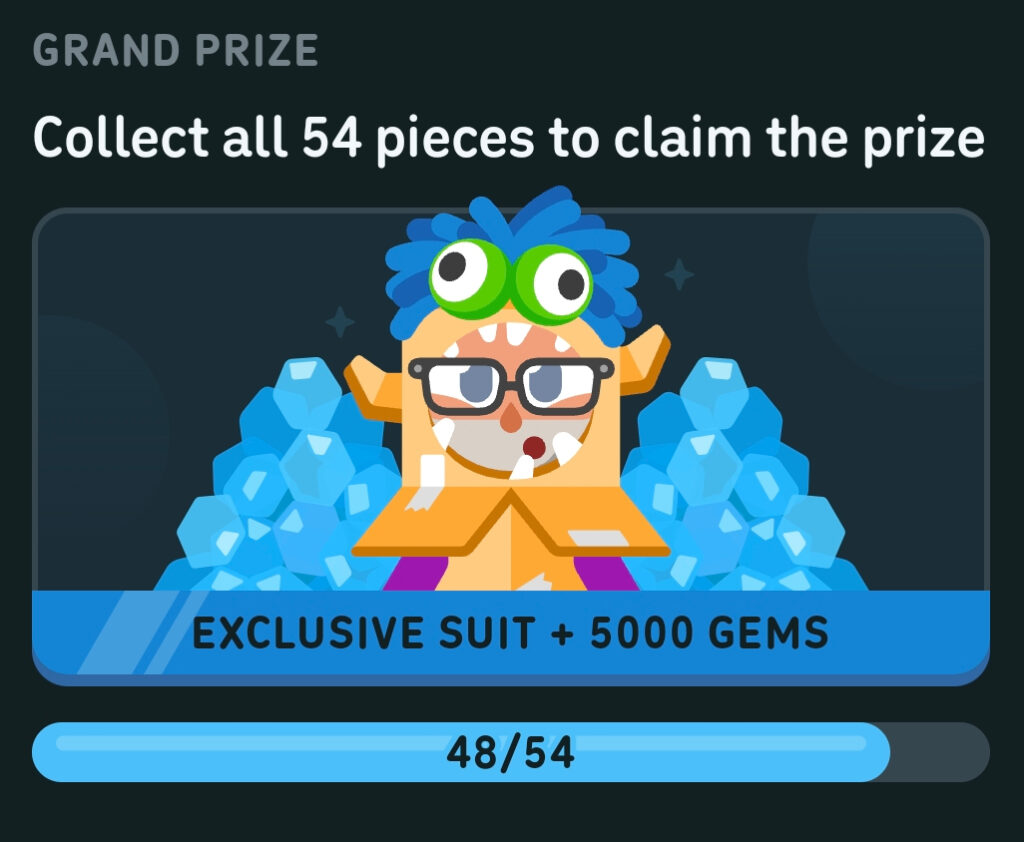
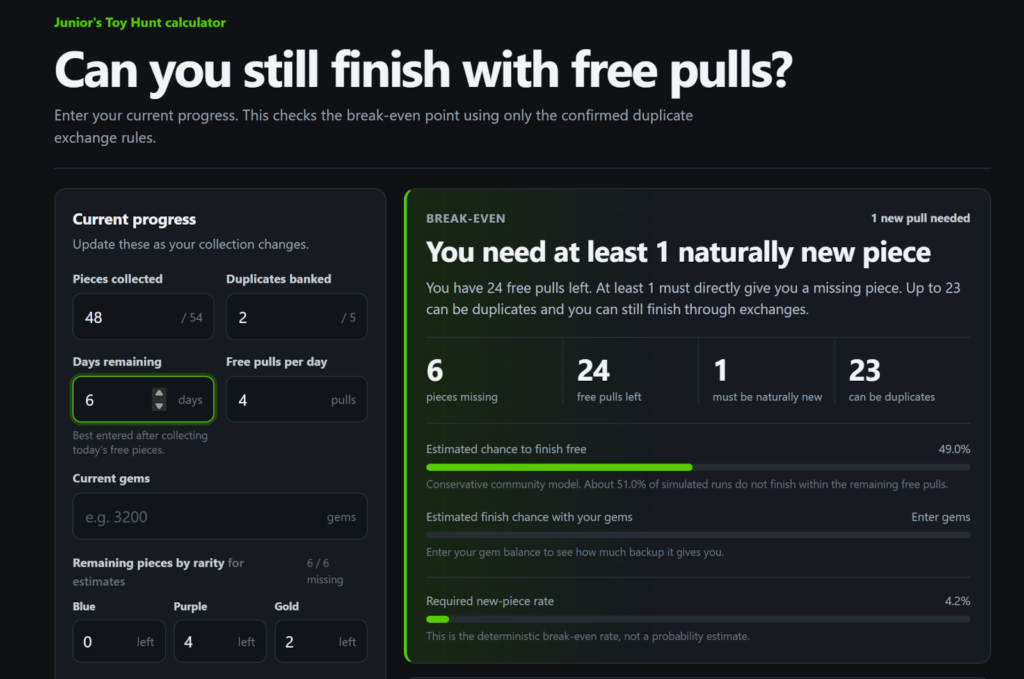
I won’t really go into great or mighty detail about the ins-and-outs of Duolingo. But, there is a regular exercise where you repeat back a phrase it says to you — and has shown on the screen, as above — and then it…judges. I’m not precisely sure how, but it highlights a number of words that you said right versus not and then if you get a certain percentage of words or certain key words correct then it passes you. It’s something that can be very useful to practice while learning a language.

But, it’s often quite buggy. At least on my phone. Sometimes it fails me before I can speak. Sometimes I get a pass despite mumbling. I have occasionally had to figure out how to say the word incorrectly in the “expected” way to get it to register I was speaking.

THEN, Space Pilgrims, we have the phrase: Zij is zeventien.

It’s one of those Dutch phrases that I think is pretty immediately understandable by folks who can read English, but let’s save that for half a second down the road.

It failed me with that a week or so ago. I passed all the other glitches and mistakes I made, but not that phrase. There’s a place where you can visit your past mistakes and correct them — it’s a bit odd since you tend to do that in the lesson itself, but it’s a nice way to see things that maybe tripped you up — and it has sat there the whole time. No matter how I say it, it doesn’t register. I have recorded Duolingo itself saying it. I have used translation text-to-speech apps to say it.

I even one day, this past week, reached a near breaking point where I just shouted it in a variety of pronunciations.

Zij is sayvayteen.
ZAY ES SEVENTY!
ZI AS ZEBENTAN!

Etc.

It was only after I had had my several minute shouting match at my phone that I realized that my windows were open, and drapes pulled back, so it was quite probably audible to anyone walking by on the street (and our neighbors) that I am shouting variations of “Zij is zeventien!” on loop.

Which meant I was shouting, in Dutch, “She is seventeen!,” on repeat. For minutes. And anyone who glanced into the window would have seen me holding my phone while doing it.

I would like to apologize to my fellow Americans abroad that I am doing absolutely nothing good to improve our relationship with the lovely Belgian people. Whoops.

Bonus fun fact, though: If I tell Duolingo that “I can’t speak right now” it auto-passes the exercise for 100%. Which I 100% abuse on almost daily basis to get all the dang Daily Missions speed cleared.

Amazon Is Within Its Rights, But Eh…

tl;dr: Old technologies die and companies drive profits by pushing new ones, but at the same time, the warning of this is less about a specific company and more about a whole mindset. Kindles are fine, but you should have back-up plans.

Above screenshot is from the top of ArsTechnica’s article: For the first time ever, Amazon is cutting old Kindles off from the Kindle Store. Which seems…strange. Not that they are doing it, but I thought they had already done something like this for older Kindles. I’m getting Mandela Effect’d in real-time.

Anyhow, says AT references an article from Good-E-Reader: You can no longer buy e-books on Amazon Kindle made in 2012 or earlier.

Technically that’s [sic], as far as I know, since the purchasing seems to still be possible for the next month or so, but it’s a minor correction.

Another possible source if you just like to see various talk about the same tech news is not-shockingly the same way:

There are a variety of specific points brought up but it seems like consensus for the actual impact is:

  • You will not in any way lose your library, just the ability to connect said library to devices over 14-years-old.
  • The “bricking” they talk about seems to be more about books being associated with your account…
    • …which in some context is the same as “losing” them but there are mitigations.
    • …but in principle you could factory reset and still have a functional device by transferring books via cable.
  • A big impact seems to be people who use some variation of local public library collections and maybe [/maybe not] Kindle Unlimited type services, who might very well lose access to those.

My “first take” [for some definitions of first take, after spending an hour reading up on other takes and such] is that:

Amazon is 100% in their right to remove support for old technologies and hardware not up to date with current standards and future-plans, but at the same time PHHHHBBBTTTT.

Amazon is only going to lose (a relatively small amount of) face by this, no matter the reasons and this demonstrates the danger of the ownership-free future The Algorithm Class have been pushing.

[in 10 years you’ll still be hearing people talk about Amazon just stops supporting Kindles left and right much like how the 1984 incident back in…2010?…is still quoted as though it happens on a regular basis despite other bookshops being more prone to it]

Look, 2012 was a lot of time ago. Stuff that was brand-new in that era like Nintendo’s Wii U and Microsoft’s Windows 8 have already been sunset at this point (the former in a way no doubt similar to the what the early-Kindles are going through, still functional just not connectable to a shop or receiving device specific content). Computers and TVs from that era are different. Phones are completely different. Stuff changes and tech stuff changes significantly across 1.5 decades.

If anything, it’s a testimony to how well the old Kindles were built that the devices are functional enough that people are still attached to them…1

The fact that it is almost trivially easy to access your Kindle library through your phone or tablet or browser or through a computer app also factors into my somewhat lack of ire about this, though I still have ire.

Outside of the simple truism that old technology eventually gets forgotten [digital files last forever or five years, whichever comes first] my broad assumption that the DRM-wars are a big part of this decision. For whatever reason, we are in a world where ebooks are one of the most protected technologies and, in principle, harder to crack than music [often sold with zero DRM] and at least physical movies [which, if nothing else, can be played on a variety of players before you even get to ripping data from them].

Ebooks, especially Kindle-proprietary formats, and audiobooks [ditto, but Audible] undergo a constant push to innovate where a lot of the innovation is simply to stop people from breaking the DRM on the books they bought.

Piracy is real and has a real impact, but this confuses me to no end.

That is where absolutely any sympathy from me for any company, author, or anyone on the side of Amazon in this case ends. You should not have to rely on a third party to maintain your library and then be expected to buy upgrades to technology or sign away more rights just to re-read a book you bought [a lease to read] years ago. If you don’t want to maintain the library without snatching increasing amounts of personal data to build up into personas you sell to other entities, let us maintain our own. Books do not need DRM. If you are relying on anti-consumer tech to swim above piracy the sharks have already won.

All this being said, here are a few things that are semi-contradictory but I think are true enough to wrap up this kind of going-nowhere besides to take more pot-shots at the anti-ownership-driven future:

Promoting piracy in retaliation for this is a terrible argument. I’m old enough and been on the internet long enough to know that pirates are going to promote their auto-response to everything like it’s a…well, an auto-response. “Netflix increasing its prices? Pirate all the movies!” That kind of stuff. “Content creators barely get paid anyhow!” is the old workhorse that has been used in various forms for years and it remains as ignorant now as it was back then.

I 100% support anyone who uses technology to get around DRM to back-up their own library. Zero qualifiers. Don’t care about any contract or license or what have you. I don’t necessarily think they should have any rights to share it [but…] and especially not to make money off it but I should, and you should, have the right to make a copy of those files that does not require a specific device.

Promoting other ebook readers or even physical books is not precisely the answer. Books break. Folks who read 3-4 books a week will slam shelves full of books pretty quickly. Libraries and bookswap stuff is nice [I donate a lot of physical books] and I support that. Still, physical books are not necessarily going to have the advantages that some ebooks have even though they trump ebooks in other ways.

Other ebook readers are definitely an idea but if it involves simply buying into another ecosystem? Eh. I’d rather promote 100% open ebook readers or apps for common devices that can access all your libraries. See my second point.

I still like my Kindles. Though I am somewhat not in the target audience for this outrage since I tend to update my Kindles semi-often, every three-to-five years. I put them through a lot of wear and tear. Also, I’m the sort who would rather update my ebook reader than get a new gaming console or even a new phone.

Technologies will continue to die by design and a shift towards anti-ownership will continue to try and strip of your rights. Full-stop, the end.

  1. …even though a non-zero and possibly non-minority of the loudest complainers are folks who absolutely do not use old Kindles for various reasons. ↩︎

Chewing on a Proper “Self-Hosted” Web-Sphere: Very Early Thoughts

Photo by Nick Karvounis on Unsplash

It wasn’t technically Daniel Sell’s “How to Stop Jumping Ship” that made me start thinking about the topic of this post, but that is a linkable resource that has some of the information that has filtered into my brain space:

How To Stop Jumping Ship
08 Mar, 2026

Almost all of us have been on the internet long enough to have had one of our essential community hubs go flying off into oncoming traffic. MySpace, G+, Discord (world weary sigh)? Facebook and Shitter's decent into I Have No Mouth, And I Must Scream? Dead and dying, the lot of them, and they take what little community they generated down with them every bloody time. I'm tired of wasting energy on rebuilding community ties over and over again, it's not an especially good use of our time and it means that those of us who are most comfortable with, or benefit the most from, a fractured, chaotic wider community benefit and rise to the top. Behold, the world.

Important bit from slightly below that:

So I propose…we just toss it all in the bin and go back to the beginning. Blogs, newsletters, IRC, mailing groups, and, sure why not, Usenet, go nuts…These things are time tested, functional even in the face of overwhelming lack of interest from the general internet, and are, most importantly, utterly unbreakable. A specific blog, irc etc etc might disappear, but that won’t take anything besides that one facet of a larger whole with it.

What actually started it was an email which was sent out to the Melsonia email list. Same sort of information, a bit more pithy:

Do You Have A Blog Yet?
 
'Cos you should. Social media is poisonous, drains all your finer impulses. Wastes energy you could spend being happy. So I made a webring and a blogroll to make me happy.
 
How To Be Happy Too
Go make a blog now. Even if all you do is post your campaign notes up on it, I wanna see it.
Join a webring. Yes, like in the 90s. People will find your blog and you don't have to do anything other than be you.
You can even add a blogroll to it, just like in the Google Plus times.
Post. Read. Post. Read. Delete social media. Post. Read.
 
Really, it's that easy. You don't need to be good or popular or cool. If anything, they're the worst people to have blogs. The uncooler the better, I say.

Pretty much everything in that image is in the above linked post, though one addition is very much in-line with the stuff I talk about here, which I’ll quote:

Social media is poisonous, drains all your finer impulses. Wastes energy you could spend being happy.

He includes a link to Bear Blog which I won’t include because I’m sure it is fine but this is not an endorsement of a particular product over the other and at a glance, the software seems to violate a couple of principles I’ll talk about in a minute.

If anything, this post is absolutely an anti-endorsement of anything that might be considered a product. Websites/Apps-as-products are killing us. Killing the earth. Killing creativity.

I Digress All Over The Algorithm

One caveat creeps up almost immediately: Sells and I are at least partially concerned about two different things. He seems to be largely talking about (a) moving towards a platform where ideas exist outside The Platform® and are not beholden to the constant drive towards enshittification and profits AND (b) coming up with something that trumps the Algorithm Class’s version of a good time. I like both of those things, both fit strongly in my Reclaim Ownership concept I have been discussing here or there on the blog, but I think for me there is something else brewing in my brain:

Stop treating the Algorithm Class like your friend: you are a commodity to them and the current internet is designed to take resources from you and feed your resources into their bank accounts [money they use to take more freedoms from you].

We are witnessing the death of ownership and are being manipulated into thinking we need them. In 2026, The Algorithm tells you you are bored, that you are unhappy, that you are worthless without The Algorithm, that your replacement worth is derived from the dopamine you get from participating in a rich-person’s profit margin. And we believe it…

Come and share! Like and subscribe! Upvote! Get your five-year streak!

We live in a world where we give third-party companies all the content that makes the platform worthwhile but then you give up increasing rights to your own creations as they rapidly change the rules. They don’t even ask nicely. They just have your college friends’ content being held hostage and you are lonely.

AI amoebae demanding access to our creations. Less control over what we can share versus keep. Free-fall user unfriendly design based around selling digital baubles. Digitally engineered loneliness and disease. All the other terrible aspects forced upon you while specialists in behavioral modeling outsource whitepapers to tell the owners of the servers how to maximize profits from your work.

It’s Big Tobacco all over again. Paying experts to make things more addicting while telling us they are just giving us a product we really want and rumors of your own addiction are greatly exaggerated.

With the bonus that it’s not only our creations, but often the core of our friends and family groups being held for ransom. “Keep smoking and you can keep talking to your mom back home!”

THEN, they take extra data from you and sell it.

It’s like the worst possible version of the peer-review process. That process has volunteer writers being edited/scored by volunteer editors and volunteer peer-review committees. Then the output is given freely to scientific publishers who generate substantial profit off making it available. With the consequence of not publishing can include missing out on tenure and promotion.

Only instead of contributing to the ever-expanding world of valuable science, we are simply trapped in a loop where in leaving a billion-dollar money maker we have no control over ends up with being branded as anti-social and distant. No party invites without social media. Missing out on collector’s items by our favorite brands because people on X got first dibs. How in the hell do we know what Florida Man is doing this week unless we spend hours each week doomscrolling through made up posts about Florida Man?

“I can’t leave Instagram, what about all my friends!?,” we say over and over as our data is stolen and the money generated from it is spent to lobby for war crimes. Taking your joy of expression and turning into AI slop generated in data centers so environmentally unfriendly they are altering ecosystems while unwriting decades of copyright and intellectual property law.

Don’t say, “If you are not paying for it, you are not the customer.” That’s tired. Sad. Ignorant. You can pay for it all day long and to The Algorithm Class you are just money and never enough.

Besides, you are very much paying for it and its the most expensive purchase you have ever made.

Like cats, there is no free social media. We are collectively paying billions of dollars to avoid going to bed on time. Our tax money spent to subsidize The Algorithm Class. In return, The Algorithm Class buying out a large portion of our governments for their needs. Every lost ecosystem and plot of land to build data centers. We are spending generational wealth indirectly to look at ads on Facebook.

And the saddest thing is that for all this money, you and your creations are worthless to them individually. Sold for pennies. A penny today so they can buy congressfolk to not pass privacy laws and make a dollar tomorrow.

That’s the thanks you get. Being sold for $0.03 on loop with no protections just so hackers can get your national ID numbers and ruin your credit while the data hoarders say, “oops,” and face no consequences.

There is no ceiling that will stop folks from generating profit off of your hard work and there are very few protections to keep you from suffering the laziness of their vibe-coding neglect.

I DIGRESS.

An Early Thought Experiment Towards Doug’s Ideal Web-Sphere

The point is that reading Sells’ post made me think about how hard it would be for me to actually get any of my friends and family on board with creating a web-ring or similar. I could probably get two or three signed up but the siren call of the wide-open for-sale web would hang there. We are two decades into the social-media-and-search-engine revolution that has stripped us of a properly free internet.

This means this is all in the heady realms of though experiment, so taking that as an act of freedom rather than problem, I was thinking of things I would like to see if I could back and shove Myspace off a cliff.

  • An actual emphasis on creator ownership, not just virtue signaling. No caveats or catch-EULAs where you give up the rights.
  • An emphasis on self-hosting or hosting done by entities where you pay them real world money to host your data and in exchange they treat it as hands off for any other use unless they pay you to use your data.
  • Related to above, but you are free to take your data whenever and wherever you please. Zero retention in a third party and absolutely no “a third party sold your stuff to another third party that has no contract with you explicitly” unlike the current real world problem.
  • “Censorship” and moderation are generated at the hands of the end-user through tools easy to read and use.
  • No advertisements unless the content creator is getting paid a substantial portion of the fee [let’s say 80+%] and at their behest [yes, this means content creators will have to pay to post stuff].
  • Multiple media streams — text, microblogging, video, audio — can be handled by servers optimal to them, each chosen by the content creator.
  • No addiction-behavior models. Discovery layer predicated by the needs and desires of the end user rather by a creation of any sort of presumed force.
  • In fact, there would be optimally many many end-user tools that have their own approach to discovery and moderation.
  • Anonymity vs ID exposure decided by content creators.
  • Absolutely NO Upvotes and, perhaps most controversial, probably NO comments posted to your own data stream [they would be posted to the commenter’s data stream]. The idea is to break apart the Skinner Box variation of the internet [as described here or there by Cory Doctorow]. You will not get algorithmically friendly shiny cookies. You share data and information and art: others can read it and watch it and enjoy it. SEO is the mind killer. SEO will pass right through you. When SEO is gone, all that remains will be memes.

In other words, something where people create content streams through many different self- or creator-focused-hosted methods and something — webrings, RSS/Atom feeds, metadata chunkers, your own eyes and fingers — will handle this and there will be no fake digital commons generating billions of dollars in revenue as long as you keep playing ball and getting your grandma to sign up for an account.

No lectures from AI-generated moderators about how you need to tweak your content to maximize conversions.

Hell, there would be no conversions. Death to the trust-economy. No product of The Algorithm Class has earned the right to addict us and constrain us to the information/data/consumption-complex they have chosen.

You decide what you want to read and no one knows what you do with it but you.

The Easter Sink Incident

I am a big fan of home repair. I’m not saying it’s easy. Hell, it’s often quite hard. There are plenty of times when you want to call a professional. Still, I like home repair a lot.

It’s one of the Tiers of Ownership that I believe in. A bit of control. A realization of what you have. Like cooking. Or posting your content to a resource that you have actual stakes in upkeeping.

This is a story about when home repair goes wrong.

On Easter Sunday, 5 April 2026, I was doing one of those gnarly-but-necessary tasks: cleaning out a deep fryer. I needed to refresh it because I was going to cook some vegan nuggets to go with our usual Sunday waffle meal.

I went into the water closet downstairs to wash my hands and a few seconds later noticed the sink was not draining. To clarify, it was draining but only if really full and only a small amount until it got about 1/3 full and then stopped.

We had some clogs upstairs in the shower and Kaz had worked on fixing those — later I realized the clogs are less like a traditional clog and possibly a mechanical aspect causing a bit of a vacuum/pressure problem but I have not solved that yet — and we were convinced that this new problem was somehow a child of the old problem. I tried plunging. We tried running water up to near the top of the sink to see if we could some pressure to release. Nothing was working.

Kaz unscrewed the screw holding in the drain guard. Let me illustrate with a picture.

The screw there in the middle. We wanted that out so that we could try and see what thing might be blocking the water flow. Past that part of the sink, you get this:

Something like a p-trap but not quite. I mean. We tried using a couple of tools to see if we could figure out where something was blocking the flow from the sink through this device.

Nothing was working.

We put a weak-but-potent-enough mixture in there to help break up clogs but had the problem that water simple wasn’t flowing enough. I would fill the sink up and let it slowly drain to the 1/3 mark. Did this on loop.

After maybe an hour or so, a time when I should have 100% been working on making Sunday dinner, there was no real progress.

Kaz had committed to running to a shop — few were open on Easter Sunday, as you can imagine — and while getting ready for that, I decided to reach under and feel around to try and figure out if there was supposed to be someway for us to access the piping system.

At that point, the whole under-pipe just fell completely out and dumped a sink full of water+chemicals all over me, the wall, the floor, and the tools we had been using.

Luckily, Kaz had not quite left yet and so I had helped wrangling cats and cleaning up a hell of a mess.

Turned out the pipe had a lot of soap-scum built up, along with the other bits such pipes accumulate, and they had somehow wedged into the section right as it goes into the wall.

I had no idea how I was able to effectively rip the pipe from the sink with barely a touch. Like finding out you have super-strength.

ONLY, you might have guessed it, but it was foreshadowed earlier on: turns out the screw that holds the drain-guard into place also holds the pipe in place. In fact, we had been massively lucky that it hadn’t dropped out earlier while we were waiting and possibly causing even more damage.

At any rate, we were able to take the pipe and get it completely cleaned out and get everything re-installed and cleaned up and working possibly better than has since we have moved in.

Never did make waffles, though. Sunday dinner ended up being cold cereal and sandwiches.

Did get the deep fryer cleaned. There’s that.

The Tower of Babbling Replies

There are a few “Explain the Joke” subreddits on reddit and most, probably all, are trash-tier karma farming circle jerks. Just absolutely awful.

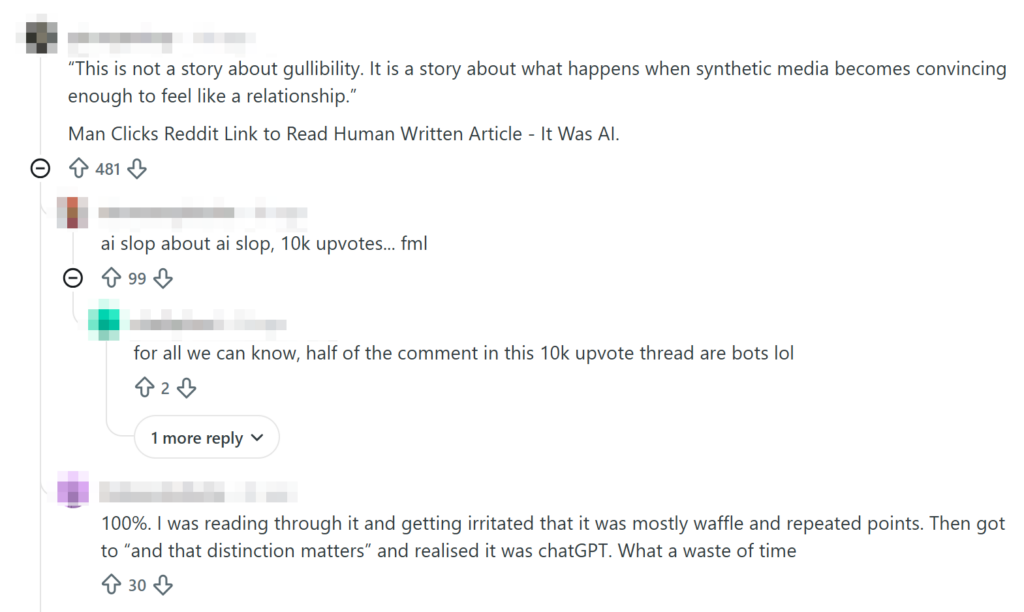
The same easy-as-shit jokes or rage-bait memes are posted over and over with people showing up in the thousands to comment. Sure, some of the replies are just bots joining in on the blatant karma manipulation. Which is fitting since it is likely mostly bots posting them. Bots and people trying to farm a few easy k karma to kickstart a reddit account so they can then sell it to bots.

In fact, you could probably automate a script to block every person who ever makes a post in one and trim a fair number of crap from your reddit experience.

Some of the replies are just going to be people who can’t help correcting others or sharing their thoughts, even when the same posts show up once a week or less. It’s weaponized tribalism versus default redditor behavior.

It is especially painful because posts from a couple/three of these subreddits frequently drift to the popular feed which dirty little no-accounts like me are forced to browse without extensive bookmarks: which might be the point. Let the shit float so people are forced to make an account just to have the tools to block them. Eh. Every day is a gift.

HOWEVER, you do occasionally get gold despite the massive attempt by gravity to pull sanity off a cliff. Like this one asking about the Tower of Babel made in [not-]LEGO [look at me violating my “never link to reddit or any social media” rule].

Pardon the proximity to a pun, but my brother in Christ, what could we possibly explain? I can get folks posting references to obscure-but-knowable things with a bit of a gate-keep to even knowing search terms. Sure.

Things like the Tower of Babel might not be universally known but when the immensely searchable words are right there….

At any rate, like all good circle jerking on reddit, the scant pretense of actual joy is people running with it and the replies are full of people posting answers [some on point] in various languages….and some people then trying to argue about the true meaning of Babel. Which is like the true meaning of Dollar Store kitten calendars. It’s aliens, my man. All aliens. All the way down.

Bonus, someone ended up inserting a Hail Mary joke which will make no sense until you’ve read maybe the first quarter of the book, but still.

*jazz hands*

I look forward to this above image becoming a post on this same subreddit in a couple of days.

Putting Myself on a “Spending Freeze” for Two Months

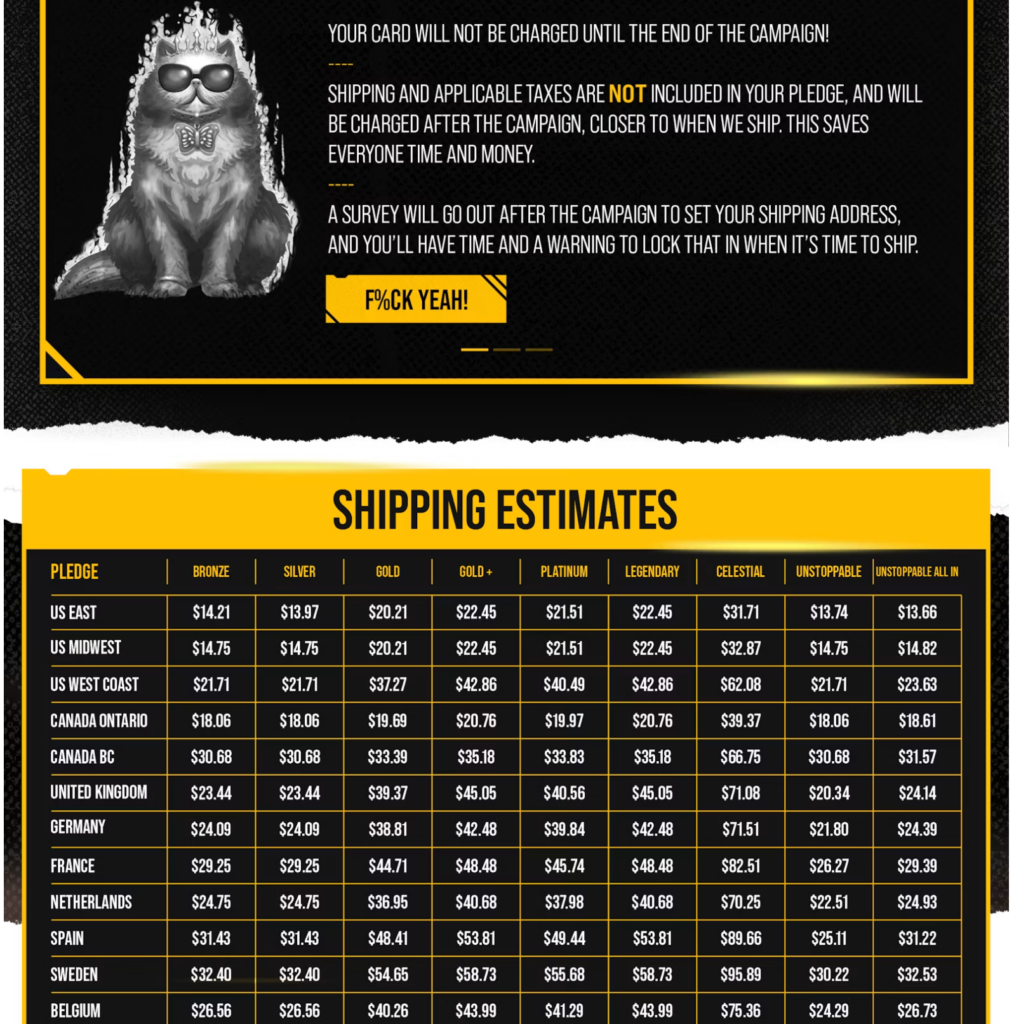
This morning I made two sizeable purchases. One via a Belgian storefront for stuff like an automated cat feeder, some kitchen supplies, another air filter since allergies are whooping us, and some cat treats. The other purchase was from the US Amazon storefront and represents something like three+ months of stored-up shopping cart. Possibly the biggest Amazon order I’ve ever made but maybe not [not four digits big, just a lot of stuff at once, then with shipping and international handling fees and currency conversions and whatnot].

To explain the latter, when we moved I lost a decades-long history of streaming movies. Upwards of 200 movies. Most likely upwards of 300 movies. Stuff I’ve watched a lot. Genre classics. A fairly joyously curated list. And stuff from streaming services like Shudder which is not available here.

Something I started doing was picking up, through various methods — largely online — was high quality physical replacements of my favorite bits of that lost digital media. Some US versions but also UK, Belgian, French, German, Australian, Japanese, and so forth releases. I am finally at the effective end of that and today’s order was more or less wrapping it up.

Only, as soon as I clicked order I got kind of a icky feeling.

Not for what I ordered. Not for my at least momentary rampant consumerism. While this is something like twenty movies and that’s a fair lot, it does represent a fairly curated list and mostly definitive editions of everything on the list.

It’s just… I hit this moment where I’m kind of tired of buying things. Combined with stuff like pre-ordering the next year’s worth of Big Finish audios and some collector’s edition books — though of the “a lot cheaper” variety than my old indie book collecting days — it does represent a fair amount of money spent in the past two weeks.

Consuming media can be a black hole. Stuff where you spend more and more and then always look to a horizon. I am 100% opposed to the “clutter free” lifestyle that tends to prioritize streaming and the dissolution of ownership. I am also aware of my tendency to packrat and curate past the obvious choices. Stocking up on just-in-cases.

Anyhow, while I will no doubt enjoy and rewatch everything I ordered today multiple times, I think this vibe is a sign for me to call it quits right there. There are some pre-orders and outstanding crowd-funding. I have enough stuff to spend a good couple of months just enjoying.

Thus, from now until my birthday (30 May), I am going on a spending holiday. Taking a break from being a consumer whore, as it was.

While I promote ownership as a concept, especially curated ownership, you do really want to prioritize the stuff you will use and love.

This is my two months to do that.

And then maybe more but we’ll see.

Page 1 of 7

Powered by WordPress & Theme by Anders Norén